
Florida Amendment 3: the new homestead exemption, who qualifies and what it saves
Florida voters approved Amendment 3 on November 3, 2026. From 2028 it takes the first $250,000 of a homestead’s value off every property tax except school taxes. On a $400,000 home in Orange County, that is roughly $1,938 a year, but only for owners who qualify, and people moving here from out of state wait five years for the full amount.
Checked against the enrolled joint resolution, November 4, 2026 · Results are AP projections until the state certifies them.
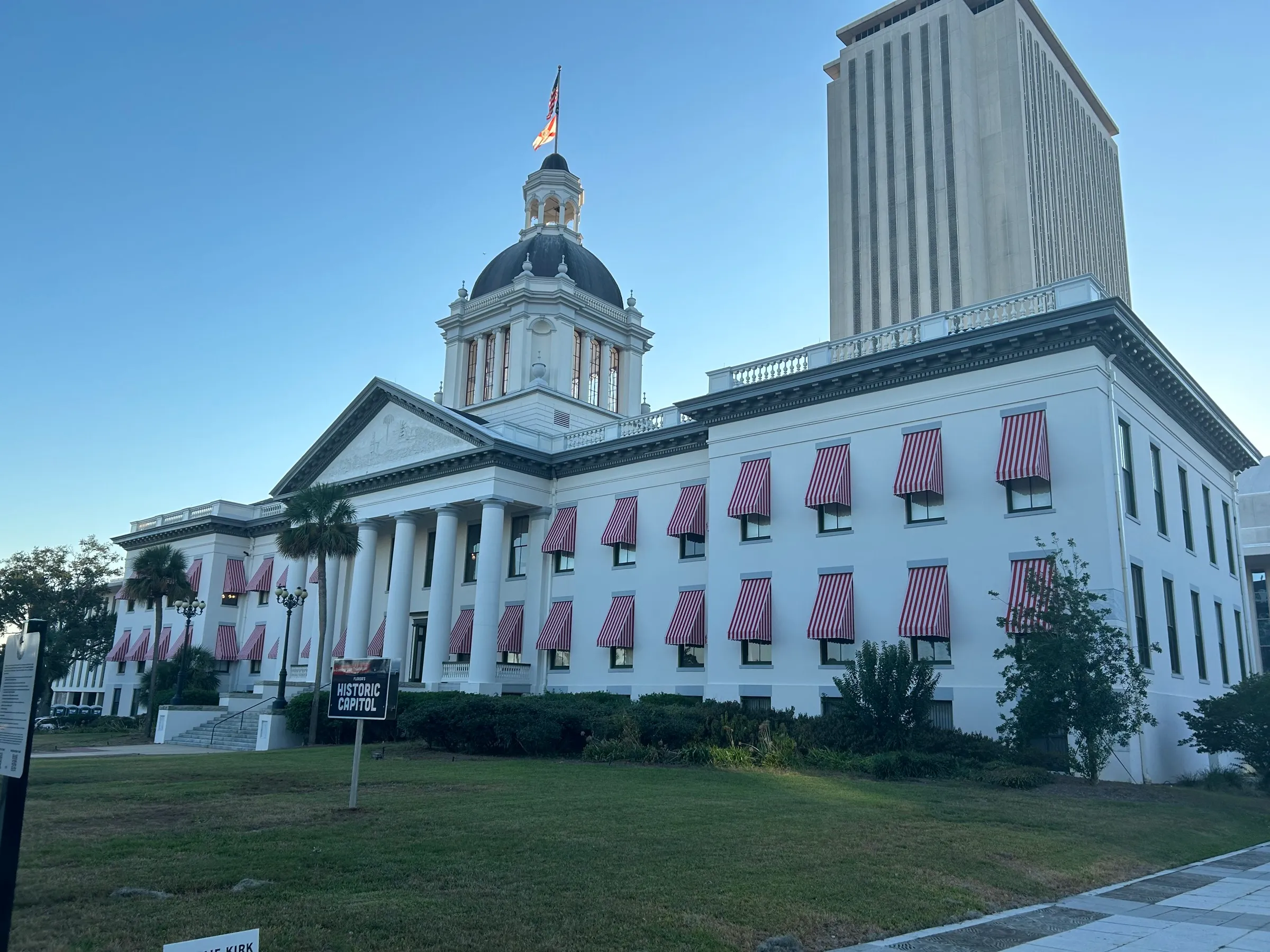

What Amendment 3 changes
Today a Florida homestead gets two exemptions: $25,000 off the first $25,000 of assessed value for all property taxes, and about $25,000 more off the value between $50,000 and $75,000 for taxes other than school taxes.5,2 Amendment 3 replaces the second piece with a much larger one:1
| Tax year | School taxes | All other property taxes |
|---|---|---|
| 2026 (today) | First $25,000 | First $25,000, plus $50,000–$75,000 |
| 2027 | First $25,000 | First $150,000 |
| 2028 | First $25,000 | First $250,000 |
| 2029 on | First $25,000 | $250,000, raised each year by inflation (CPI) |
“All other property taxes” means the county, city and special-district levies on your bill: the county general fund, a city like Orlando, the water management district, the library district and so on. In the communities we cover, those make up 60% to 65% of the tax rate; school taxes are the rest.
The amendment does three other things:1,2
- It lowers the yearly cap on assessment increases for non-homestead property, such as rentals, second homes and businesses, from 10% to 5%, for non-school taxes.
- It limits what counties and cities may spend property tax money on: public safety, schools, roads and other infrastructure, flood control and natural resources, debt, employee retirement, and running county offices and city government.
- It lets counties and cities raise the exemption further for their own taxes, and special districts by referendum.
What stays the same: Save Our Homes still caps a homestead’s assessed value at 3% a year (or inflation, if lower), portability still lets you carry up to $500,000 of that difference to your next Florida home, and the senior, veteran and disability exemptions are unchanged.1,4
Non-ad valorem assessments are not affected either. A CDD assessment, and county fees for garbage, stormwater or street lights, are billed per lot rather than on value, so the exemption doesn’t reduce them.
Who qualifies for the full exemption
You get the full $150,000 in 2027 and $250,000 from 2028 if all of these are true:1,5
- You had a permanent residence in Florida on December 31, 2026. The text asks whether you lived here as a permanent resident on that date, not whether you owned the home you lived in.
- You own the home, by legal or equitable title, alone or with others.
- It is your permanent residence on January 1 of the tax year (or the permanent residence of someone legally or naturally dependent on you).
- You apply for the homestead exemption with the county property appraiser by March 1.6 If you already have it, you don’t reapply; the new amount applies on its own.
Only one homestead exemption is allowed per person or family, and it covers your primary home only. Second homes, vacation homes and rentals get nothing from the larger exemption, only the lower 5% assessment cap.
A Florida resident who sells and buys a different home here, including a new build in 2027 or later, still qualifies: what counts is having lived in Florida on December 31, 2026, not living in the same house.
If you’re moving to Florida: the five-year rule
If you had not maintained a permanent residence in Florida as of December 31, 2026, you get a smaller homestead exemption at first:1,2
- $25,000 off for school taxes.
- $50,000 off for all other taxes, raised by inflation from 2028.
Beginning with your fifth year of that exemption, you get the full amount everyone else gets.1 So someone who moves here in 2027 and first claims a homestead on January 1, 2028 would get the smaller exemption for 2028 through 2031 and the full one from 2032. Over those first four years the smaller exemption works out about the same as today’s homestead exemption, so a newcomer’s bill doesn’t go down, but it doesn’t go up either.
From 2030, a county or city may shorten the five-year wait for its own taxes by a two-thirds vote of its commission, if it finds a critical local need. Orange and Osceola counties haven’t said whether they would.
Being a permanent resident is a question of fact the property appraiser decides. The things Florida law lets the appraiser look at include a recorded declaration of domicile, a Florida driver license with your out-of-state license given up, Florida car registration and voter registration, where your children go to school, where you work, the address on your federal tax return, and utility bills at the home.7 If you’re moving here soon, talk to the property appraiser or a Florida real estate attorney about what you can document, and when.
What it saves on a $400,000 home
Take a $400,000 home with a homestead exemption in unincorporated Orange County (the district for Hamlin, Lakeshore Preserve, Waterleigh), whose owner qualifies for the full exemption. At the 2026 rate of 16.0306 mills, of which 6.343 are school taxes:
- School taxes: 6.343 mills on $375,000
- $2,379
- Other taxes: 9.6876 mills on $350,000
- $3,391
- Yearly property tax
- $5,769
- School taxes: 6.343 mills on $375,000
- $2,379
- Other taxes: 9.6876 mills on $150,000
- $1,453
- Yearly property tax
- $3,832
That’s $1,938 a year less, about $161 a month on an escrowed mortgage payment. In 2027, with the $150,000 exemption, the saving is half that: $969. School taxes don’t change.
The same $400,000 home in each tax district where the communities we cover sit:
| Tax district | Tax today | Saving in 2027 | Saving from 2028 |
|---|---|---|---|
| City of Orlando18.0326 mills · Isles of Lake Nona, Laureate Park, Meridian Parks, Storey Park | $6,470 | $1,169 | $2,338 |
| Unincorporated Orange County16.0306 mills · Hamlin, Lakeshore Preserve, Waterleigh | $5,769 | $969 | $1,938 |
| Unincorporated Osceola County (district 300)13.8253 mills · Storey Lake, Sunbridge | $4,971 | $855 | $1,710 |
A few things move these numbers:
- Assessed value, not price. The exemption comes off the property appraiser’s assessed value, which on a new home is often below the contract price, and on a home you’ve owned for years is held down by Save Our Homes. Whatever the value, the saving from 2028 tops out at $200,000 of extra exempt value times the non-school rate; any home assessed at $250,000 or more saves the same dollar amount.
- Tax rates can rise. The table holds 2026 rates steady. The House’s analysis puts the loss to local governments statewide at $4.95 billion in the first year and $11.86 billion a year once fully in place.2 Counties and cities may raise their rates to make some of that up, which would shrink the saving.
- Newcomers save nothing at first. Under the five-year rule, a buyer moving from out of state pays about what the “Tax today” column shows until the fifth year of their exemption.
- The first year of a new build. Homes are valued as of January 1, so a home finished during the year is often taxed on the land alone at first, and the homestead exemption starts the January 1 after you move in.
For the whole monthly cost of a home here, with mortgage, insurance, HOA and CDD, see what it costs to buy a home in Orlando.
What isn’t settled yet
The amendment tells the Legislature to set uniform procedures by general law, including how the five-year rule is administered and how a county or city raises its exemption.1 Those laws will decide details such as how you prove you lived in Florida on December 31, 2026. Until then, the county property appraisers are the best source for how they’ll apply it.
Questions
Did Florida Amendment 3 pass?
Yes. Florida voters approved Amendment 3 on November 3, 2026, according to the Associated Press; it needed 60% of the vote. It takes effect January 1, 2027, and the first tax bills it changes are the ones mailed in November 2027.
How much is the new Florida homestead exemption?
For taxes other than school taxes, the first $150,000 of a homestead’s assessed value is exempt in 2027 and the first $250,000 from 2028, adjusted for inflation from 2029. School taxes keep the $25,000 exemption.
Do people moving to Florida get the larger exemption?
Not at first. Owners who did not have a permanent residence in Florida on December 31, 2026 get $25,000 off for school taxes and $50,000 off for other taxes, then the full exemption beginning with their fifth year of homestead exemption.
How much does Amendment 3 save on a $400,000 home?
In unincorporated Orange County at the 2026 rate of 16.0306 mills, about $969 a year in 2027 and $1,938 a year from 2028, for an owner who qualifies for the full exemption, if local tax rates stay the same.
Sources
- Florida Legislature: CS/HJR 1F (2026F), enrolled text
- Florida House of Representatives: CS/HJR 1F final bill analysis (June 16, 2026)
- WKMG News 6 ClickOrlando: Amendment 3 passes (Nov. 4, 2026)
- St. Johns County Property Appraiser: 2026 Florida Property Tax Amendment 3
- Florida Statutes § 196.031, Homestead exemption
- Florida Statutes § 196.011, Annual application for exemption
- Florida Statutes § 196.015, Permanent residency; factual determination
- Florida Statutes § 193.155, Homestead assessments (Save Our Homes)
Tax rates are each district’s 2026 rate, from the community pages. This guide isn’t tax or legal advice; ask your county property appraiser about your own home.